


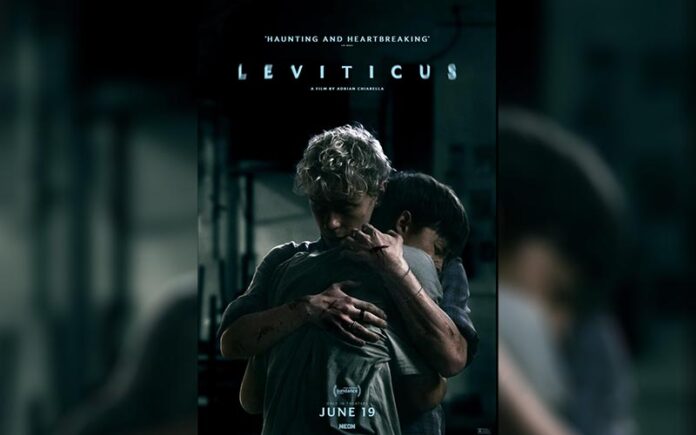
The 2026 production Leviticus is a film progressing with queer thriller, mystery, and supernatural powers. In my opinion, it approaches the accustomed social messages of LGBT-themed films and homophobia from a different perspective. Before starting the details, the plot: two gay youths named Naim and Ryan seeing each other’s ghosts. This ghost begins to threaten their lives. The ghost’s sole purpose is to appear as the loved one and kill them.
This was a very superficial plot summary, but I will move on to the details. Actually, there is no need for such an extensive summary, pages of reviews, psychological analysis, or extensive information about religious rituals for the film. That resembles a very academic article. I will only talk about how we should watch the movie.
I will also talk about homophobia, the perspective on homosexuality, and the violence inflicted on LGBT individuals. Because one topic leads to another. The “ghost” metaphor in the film is actually very powerful. I will not talk about the “religious rituals” in the film and the “Levites” who give the film its name and have very strict rules either. In my opinion, these are just textures and decor in the film… The hatred towards LGBT also has a political dimension, but since it is not our topic here, I will skip that as well.
🏳️🌈👉 My Curator Recommendation: LGBT movies worth watching
Summary of the Movie Leviticus (2026)
Naim migrates with his mother to the town where the “Levites” congregation is located. He plans to overcome his past traumas thanks to the religious community here. It is an introverted, strictly religious ritual-bound, and quite bigoted community.
Naim meets Ryan, who goes to the same school. The duo meets in an abandoned building. The two gay youths become lovers in a short time. Meanwhile, the dark side of the religious congregation will emerge. Ryan and the other young man named Hunter are sealed with a talismanic spell by the “spiritual pastor” on the grounds that they are gay. This curse is to cure homosexuals.
This curse follows Naim and Ryan. The person they love most (their lover) has become their imaginary enemy. Every time they approach each other, their lovers do not leave them alone as ghosts and make them experience horror. The only solution is for them to separate and never have a gay lover. Hunter is killed by the ghost that does not leave him alone.

Plot of the Movie Leviticus (2026): What Does the Movie Tell?
The summary of the movie is in this direction. There is no need to go further into the summary. Now, the review of the film and what does the movie Leviticus (2026) tell? I will answer this question.
The plot of the movie tells two gay youths struggling with each other’s ghosts after the spell or hypnosis (conditioning) cast on them to give up homosexuality. In my opinion, this theme is really very powerful. The “Levites” religious group in the film and the spell—or, in my opinion, hypnosis and conditioning—cast by the “spiritual leader” remain in the background. These themes add both tension and some thematic richness to the film. Because we cannot see in the film what the “spiritual leader” did or the real purpose of the “Levites”.
Leviticus (2026) What Does the Movie Tell?
I can clearly say that the film tells about homophobia. The monstrous visions of the lover there are a very good metaphor. Naim sees the harmful ghost of his lover that does not leave him alone. It is after him like an imaginary entity. Ryan sees Naim’s imaginary entity in a similar manner. The duo loses their sense of reality. The solution is for them to separate. However, if they get a gay lover once more, the same curse will find them.
In life, just like that “imaginary lover”, a monster does not leave LGBT individuals alone: homophobia. The hatred towards homosexuals constantly follows homosexual individuals like a “ghost” not only individually but also institutionally. This metaphor is very powerful. LGBT individuals are practically being hunted. The “terror-spreading ghost lovers” in the film actually represent societal hatred, homophobia, anger against homosexuals, and institutional pressures. LGBT individuals, just like in the film, are constantly subjected to violence and attacks. And it is not clear from where and when this attack will come.
States and the citizens forming the state exist together. People exist together after a common point regardless of religion, race, sexual orientation, etc. As for the state, it cannot turn the rulers’ own ideologies into a form of state tradition and administration by accepting one lifestyle as legitimate and declaring the other illegitimate. Then the state deviates from its real purpose.
Actually, the LGBT issue is mostly political. I am also skipping this topic for now. When someone says “being gay is not legitimate”, we also say, according to whom, according to what? If it is not legitimate according to you, live as you know and do not interfere with anyone else. Stay in peace with your belief within yourself. On the other hand, a homosexual individual can never be declared cursed and perverted just because they do not comply with someone else’s belief and lifestyle. That is where the state steps in and establishes a platform where all these differences will live together in peace.
Suppressed Emotions
In the film, suppressed emotions also describe the state of societal frenzy very well. As I said above, you cannot say “according to my belief, LGBT is perversion”. Because this binds you. According to what is it perversion or immorality, according to your belief. Is your belief a universal law? Society, individual, civil society, state, laws are all a whole. Within this whole, no one is superior to another. If the state becomes the state of only a certain ideology, then polarization and marginalization begin. LGBT individuals also first fall victim to “imaginary entities”, that is, to the violence that hates homosexuals and is also permitted and encouraged by the state.

Society has suppressed emotions and virtual fears that do not match reality. Homosexuals constantly fear that an external threat will come to them. In the first minutes of the film, while Naim and Ryan are making love in the abandoned building, Naim suddenly gets uneasy and feels an uncanny chill: as if someone is watching them. This metaphor is actually a cinematic narration of the “evil eyes” on homosexual individuals. LGBT individuals are practically watched by “Big Brother” everywhere and at any moment to be destroyed or hurt. This theme was very powerful. Suppressed emotions are expressed outward as fear.
Being an LGBT Individual or Being Gay
Actually, the problem is not being a gay or an LGBT individual. The problem is in “becoming a monster”. When Naim’s mother learned that her child was gay, practically the “monster” in her subconscious woke up. She showed no mercy to her child. She did not listen to her child and help him overcome his trauma. She did not accept her child as he is and play a role in Naim accepting his homosexuality, that is, his essence. The “monster” suppressed inside her emerged and she handed her child over to “a charlatan”. And that “charlatan”, with the spell, hypnosis, or conditioning he performed, practically revealed the fears and anxieties inside Naim in “an entity resembling his lover”. It is necessary to accept instead of hate.
Leviticus (2026) Is the Movie Worth Watching?
The movie is worth watching for the tension and the topics I mentioned above rather than the “Levites” in the film. The “dangerous entity resembling the lover” in the film is actually the result of conditioning both Naim and Ryan to see themselves as enemies to themselves. Homosexual individuals are asked to see their character and sexual orientation as bad, in short, to hate themselves and other homosexuals. In the film, this feeling is made “with hypnosis and conditioning” by the “spiritual leader” of the Levites.
A person hating both themselves and someone else solves no problem. Throughout the film, the two young gay lovers, within a great paranoia, doubt whether the “entity” following them is really their partner or the “entity”. This very paranoia is a cinematic scream of the pressures exerted on homosexual individuals.

The duo leaves the “entities” resembling themselves there and departs from the town of Leviticus. This is also a powerful theme. The purpose of the spell (or hypnosis) is for them to abandon each other. Yet the duo does not leave each other; they flee from that hatred. Those entities are actually the very townspeople and those waiting for an opportunity to hunt down and hurt homosexuals. The problem is not in being gay, but in families and social environments that consider themselves superior to everyone else. The problem is in public administrators, lawmakers, and state rulers who do not grant equal freedom and right to life to everyone.
Acting and Cinematography
I really liked the acting in the film. The moods of the characters and that tension they experience are practically read from their faces. Location choices are very good. Uncanny locations really explain very well that real life, crowds, streets, in short, the entire living space is really always “uncanny” places for LGBT individuals. Again, the fire metaphor was also used very well. Actually, those who burn or will burn in the fire are not LGBT individuals, but the “monsters and homophobia” in the guise of the lover.
I watched the movie without getting bored; you really feel that tension. An average-quality production I watched recently. I also found the IMDb score low. The film does not offer its audience an idealized romance and a world model where everything is sunshine and roses. It presents the realities. How LGBT individuals are seen as enemies, followed everywhere by falling after them “monstrously”, and dragged into individual depression is also explained very well.
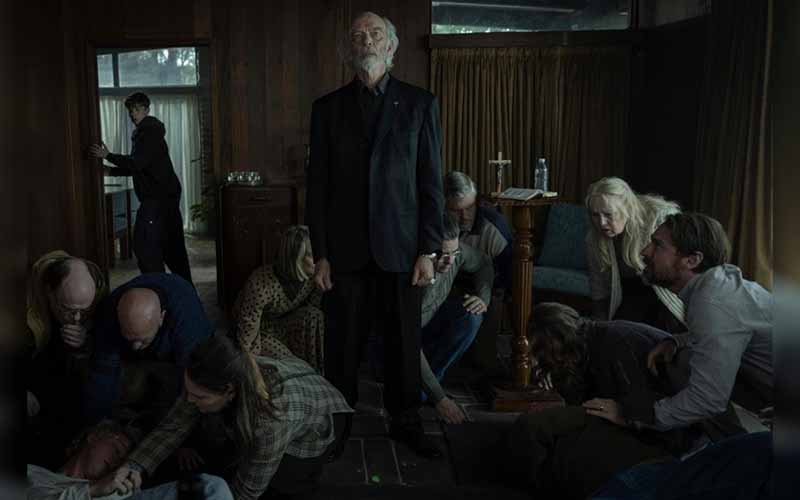
Especially, people gathering and practically wanting to destroy gay youths without questioning what their “spiritual leaders” did is also portrayed successfully. Although everyone is very afraid, no one can object. Because not only Naim, Ryan, and Hunter, but the adult people there also seem cursed. The name of that curse is definitely “hatred”. Instead of questioning, they chose to believe a charlatan.
The film has very closed symbolic narrations. For this reason, I only touched upon the points I considered important. And I did not think I would write this much about a movie either. I am also waiting for your comments.






 explores the struggle of two gay youths against curses and societal hatred. A queer thriller rich in metaphors and tension.)