

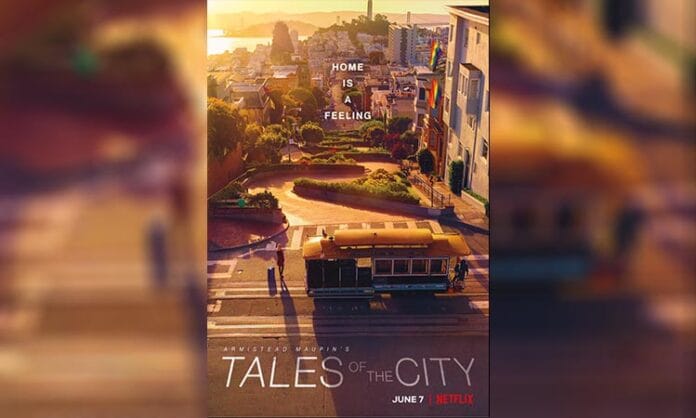
Mini series have always felt easy for me to watch in terms of running short and offering powerful stories. Tales of the City is a sincere series among LGBT-themed productions, released on Netflix in 2019. Its structure redefining the realities experienced by LGBTQ+ individuals, friendship, solidarity, and the concept of family truly pleased me. In my opinion, this series does not just offer a drama, but also presents a strong social message.
Adapted from Armistead Maupin’s novel of the same name, the series will allow us to look at other lives through its acting and topics. In my opinion, the series offers a drama deeper than a queer narrative. Not to forget, the series is a Netflix production.
👉 Curator Recommendation: LGBT series worth watching
Tales of the City Plot and Review
Although Netflix including LGBT characters is criticized by some circles, one must not forget the natural and scientific reality of homosexuality in human history. Homosexuality is not a disease; it has never been a condition that needs to be treated. This simple biological orientation being met with oppression, exclusion, and cruelty for thousands of years shows that humanity needs to confront its prejudices. That is precisely why Tales of the City offers a very valuable narrative.
The series focuses on the lives, loves, losses, issues among them—in short, the inner worlds—of a community composed of gay, lesbian, bisexual, trans, and heterosexual individuals living together in the house of 90-year-old trans woman Anna Madrigal.
These people have become a family thanks to the strong bonds between them. The series impressively shows that a blood bond is not the only condition to be a family, and that love and solidarity are above everything. Among family-themed LGBT series, The Fosters and Chosen Home (2025) also handle family bonds and true love in a similar manner. As I said before, everything is actually constructed as a result of electrochemical events in our brain. Having a conservative and oppressive mind and imposing our own belief and lifestyle on someone else produces only chaos and evil. The concept of family is like this too.
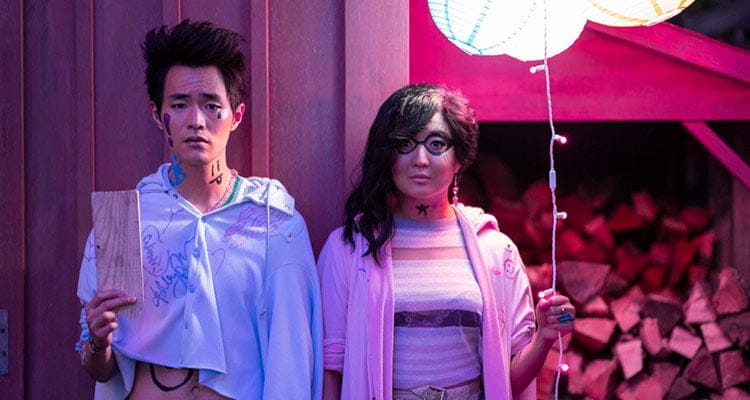
Actually, love and unconditional bonds lie at the foundation of family. Homosexuality does not destroy the family. Among the things that destroy the family are violence, economic hardships, and lack of education. Being a family is an entirely mental and psychological process; biologically, family bonds constitute only the genetic aspect of the matter.
The important thing, as I said, is psychological and mental bonds. When we look at life and other people with a universal and transcendent view, we will tear out and discard the rusty and decayed molds remaining from ancient times in our minds, I am sure of this. There is no single truth. The strong imposing their own lifestyle on LGBT individuals they deem weak and bullying them—what is it if not the indicator of human’s most terrible face?
Returning to the series again
However, Anna has a mysterious secret, and this secret threatens the existence of their home and this community they established like a family; the series continues over this theme: the community is about to fall apart. At the same time, Anna is preparing for her 90th birthday. While the community struggles with the homophobic and discriminatory attitudes of the outside world on the one hand, on the other hand, it has to confront its own internal problems.
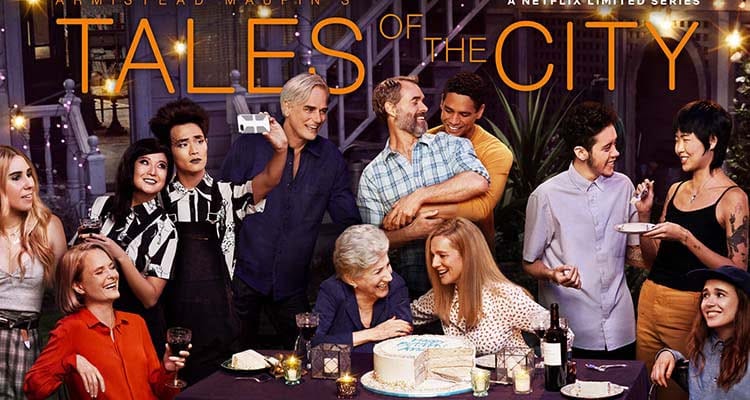
The difficulty of self-acceptance, conflicts experienced with family, the complexity of relationships, and the burdens of the past are not presented with an over-elaborate character analysis, which is very good. Instead of a superficial tearjerker drama, the complexity of human psychology is reflected. In short, to sum up: This transmission is quite successful and in moderation; there is neither an overly tearful drama nor is it too superficial, just in the right dose. Psychology is more predominant.
In the shadow of social pressures remaining from the 60s, hostility toward homosexuals, and violence directed at LGBT individuals, Anna’s secret slowly coming to light was, in my opinion, one of the most important moments in the series. Every character has their own unique story, pain, and search. Yet despite everything, they manage to hold on to each other. In this aspect, Tales of the City explains not only LGBT individuals, but what it means to be human as well. Empathy, acceptance, tolerance, and giving equal value to every life mean inner peace for humans and peace for society. Tales of the City is in a structure that fits precisely this definition.
I am not going to analyze every character one by one here; my goal was actually to share my experiences as a human. This mini series offered a good viewing for me. Life is nothing other than impressions, experiences, and our orientations anyway!
No need to write or say too much. I found the series worth watching in terms of the characters’ layered structures, the LGBT community constantly facing violence, and the meaning of family. My goal is not to summarize the series, but to read the subtexts of the series. The important thing must always be philosophical and social messages.
Yet another of my series impressions and experiences has ended.