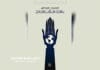


The Girl Who Was Plugged In is a science fiction classic. I wanted to review this classic I read and share the marks it left on my wrist. Of course, I will provide the plot and summary of the novel, and there is commentary as well. The “avatar” theme in the novel, along with many “self and consciousness” themes, falls into the discussion area of neurophilosophy today as well. Who are we, and what makes us who we are? These came to my mind while reading the novel.
James Tiptree, Jr. is the author’s pen name. The author is actually not a man. No one knew that Alice B. Sheldon, who wrote science fiction novels under this pen name, was a woman. Some even said that her novels were “masculine” and carried no traits unique to women. This shows the point gender distinctions have reached.
The Girl Who Was Plugged In is actually a dystopian novel set in a distant future. I hope the future will not really be dark like in science fiction novels.
The more than one thousand books I have read were different realms of life for me, brief stops in the boundlessness of the human mind. Perhaps I was making a note on time with every book I read. Whether these were novels or non-fiction. Perhaps only information will remain behind from humans on Earth, or maybe in the universe; perhaps one day we will evolve into a brand new species and exist in the form of “pure information” within the reachlessness of the universe.
✅ Recommendation: Discover curated picks from my personal reading library
Book Review and Critical Commentary
I want to briefly review and evaluate the book. I finished the book in a very short time. But I must say that, whether due to the translation or not, I felt disconnected from the book at times. As if some events were happening suddenly and seemed unconnected. Other than that, it is a short, clear novella. Are technological developments pushing us outside of being “human” in every sense? We should actually ask this question not at extreme points, but in today’s age of artificial intelligence and social media. When we get in front of smartphones, “we are no longer ourselves.” Though, what is this thing we call “us” or “I” anyway? Questions, questions…
It was especially great to gain information about the author in the foreword. Everything is there, from the author’s true identity, her hiding her name, everyone assuming the author was a man, to her suicide in 1987. The electronic devices and technology mentioned in the novel are not futuristic. But the narration, expressions, and practices within the dystopia are exceedingly realistic. I also focused on the philosophy inside the book, the consciousness-self problem.
Of course, I could not ignore the ruthless advertising and marketing sector. Today, social media platforms, applications, shopping malls, all the way to the roadsides are filled with ads. In the novel, this takes an even more ruthless form.
I especially focused on the people controlling the puppets. Today we know the term “avatar” very well. Dozens of movies and series have been made where humans control their own copies. There is no one among us who does not know the movie Avatar. And there are movies like Surrogates (2009) that I watched with interest. Our consciousness is formed in our brain entirely through the electrical pulses of neuro-chemical processes. As Hume defines human consciousness not as a whole, but as a “bundle of perceptions”! I love this definition. A human does not have a permanent, fixed consciousness; a human is a collection of independent perceptions. Really, when we transfer our consciousness and entire personality to an “avatar,” what happens to the person we call “us”?
Self is a human’s greatest asset. Again, topics like consciousness cloning and transferring the human mind to machines are related to this novel. Dozens of movies and series have been made about conscious AI robots falling in love with humans, or a computer gaining consciousness falling in love with its programmer. Again, there is also the topic coming to our minds, which has been studied recently, that life is a hologram reflection.
According to the hologram theory, our originals continue their existence in higher dimensions of the universe according to very different laws of physics. The form of this existence is very different from ours and unknown. And we might be a holographic reflection of that real existence. Or what if our entire reality is a simulation? If you ask how I connected these thoughts to the novel, I would say through the “programmed and practically puppet” people in the novel. If we cannot touch reality directly, if there is a reality beyond our body and consciousness, then who are we? Immanuel Kant dividing reality into Numen and Phenomenon came to my mind.
Beyond all this, will the human species be able to remain a biological body in the future? Artificial intelligence and transhumanism, humanity transcending its biological body to consist of pure information rather than flesh and bone, is a dream spanning thousands of years. Still, if artificial intelligence becomes a conscious being in the future, how do we interpret this? Does AI dominate humans and revolt just like in R.U.R.? Does it want to imprison humanity? Beyond all this, let’s consider that we merge with machines, having a semi-biological, semi-silicon existence; are we still the person we were then? What is this thing called personality? Is it the brain re-accessing the records it holds, or our brain realizing its own existence?
So, is a human a means or an end? Existing in an economic and political order that instrumentalizes humans is, in my opinion, debatable regarding its meaning. Actually, right at this point, I feel like diving into philosophy, but this is enough.
Plot and Summary of The Girl Who Was Plugged In
Now we move on to the plot and summary of the novel. Can a digital system or artificial intelligence that programs the brain, usurps consciousness and a kind of consciousness transfer, and takes over the human brain dominate humans? Can a unconscious and emotionless human remain a human? Details are coming.
The Subject of the Novel: Programming the Brain
In short, the novel brings to our minds questions such as: What is a human? Can the soul and consciousness be carried to other bodies? What makes a human human? Without our consciousness and emotions, would we be no different from simple biological machines? Of course, advertising being banned in the future world is the main subject of the book. To overcome the advertising ban, ads are made through product placement methods using such popular puppets. For the puppets, people whose brains and entire nervous systems are connected to a machine are used. Capital owners in the future have established similar companies for product promotion.
The whole world is programmed. Everything is hidden in the news and only unimportant events are made topics. All communication channels are under control. People only get what the companies want and give, and are programmed not to want anything else. Puppets are turned into very famous people, and ads are made through product placement methods via puppets. Whatever the puppets wear, whatever they like, people do the exact same.
Don’t the video channels directing us on today’s social media do the same thing? Isn’t the sole purpose of YouTube broadcasters, whose every word is fulfilled like a divine command just because they are watched a lot and have many subscribers, to earn money and market products? The most read books, the most listened to music, “top lists”—don’t they all actually show how we are programmed and controlled?
Summary of the Book
Plot and summary of The Girl Who Was Plugged In: Someone named P. Burke, who is tired of her ugliness and life and makes a suicide attempt, is brought back to life by GTX, a special advertising and puppet company. Those who make suicide attempts are legally considered dead.
P. Burke is locked in a control room by the GTX company in a secret underground structure, with her brain and entire nervous system connected to a machine, to give commands to a puppet girl. Here, with electrodes attached to her brain and nervous system, she transfers soul, consciousness, and human emotions to a puppet named Delphi.
Delphi is used as a product promotion interface through holocamera shoots of the GTX company. No one knows she is a puppet. Puppets wander among people, secretly introducing the company’s goals and products. Because open product advertising is banned. However, Paul falling in love with Delphi will cause big problems.
Book Details
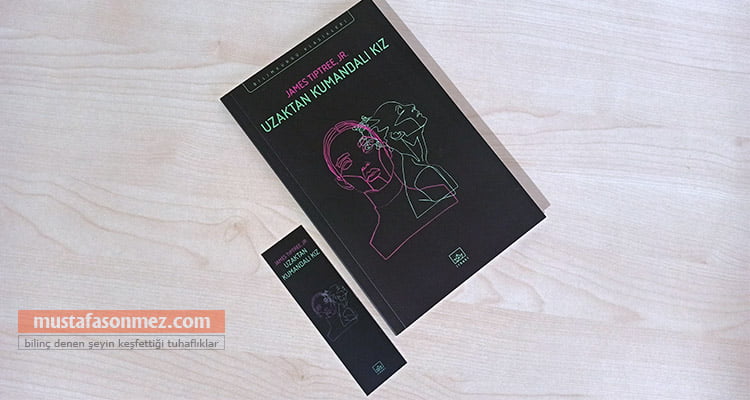
The novella The Girl Who Was Plugged In was a good read. Science fiction literature, whether classic or modern novels, reflects the massive imagination of the human mind. Our lives, our entire reality, and perhaps our technology are formed within the boundlessness of our imagination. This novella was such a read. Reading science fiction requires a distinct mental skill. I am not a sci-fi novel reader myself either; I am just someone who has briefly skimmed through the classics. I read the book in its Turkish translation from İthaki Publishing. You can read the book here.
Characters
- P. Burke: A woman rejected by society, trapped in her own body, and made invisible. She is chosen by the company to remotely control Delphi, the “ideal body.” Her story presents the most ruthless example of identity, freedom, and power over the body.
- Delphi: The “perfect body,” which does not exist in reality and is completely a company product. She is brought to life by being remotely controlled by P. Burke. She is a dystopian symbol of the cult of beauty, youth, and fame.
- Company (GTX): A giant system controlling media, influence, body design, and product marketing. It represents an oppressive, cold, and totalitarian order that transforms the human body and identity into an advertising tool.
- Paul Isham: A young man who falls in love with Delphi, but is attached not to what is visible, but to a body that is part of a lie. He experiences a deep conflict over the sincerity of love, perception, and reality.
- Control Technology Team: Manages P. Burke like a sort of “puppeteer.” It represents an unethical laboratory where the human body and technology merge.