


Maurice, written by E. M. Forster between 1913 and 1914 and published posthumously, is one of the rare works dealing with themes of homosexuality in Edwardian England. The book focuses on the stages the young Maurice—who gives the novel its name—goes through from childhood to youth, his internal conflicts, and social and class pressures.
The Edwardian era, as a transition period where Victorian social rules were still effective but some modernization trends had begun, contained serious social and legal difficulties for gay individuals. Forster explores themes of love, identity, and individual freedom in his novel. Not only that; there is total chaos with social status, fears, and blackmail.
I can’t say I finished reading the book quickly; it took a bit long. You must definitely read it, but read the novel not just in the context of LGBT or homosexuality, but to understand the spirit of an era. Read it to understand the human being. I read the book in a short time. It is a very fluid book. One of the greatest evils humans do to humans is what is done to LGBTQ+ individuals.
👉 Curator’s Recommendation: Books that will enlighten your world
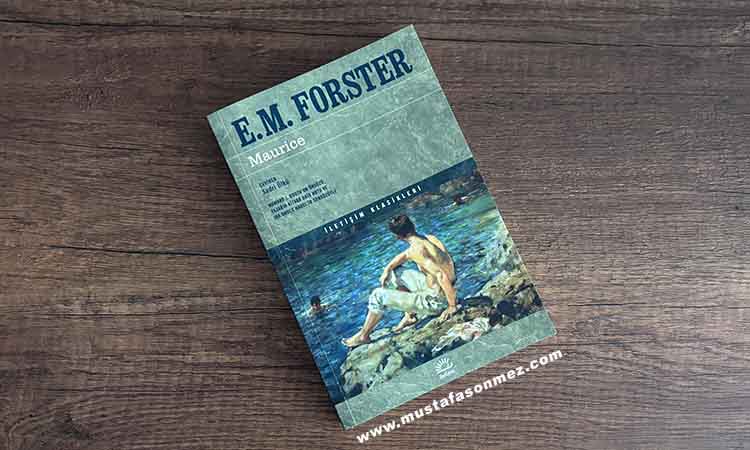
Maurice, E. M. Forster: Novel Theme and Summary
Edward Morgan Forster’s work, which has been criticized both as a literary genre and narrative and in terms of the homosexual love and social status differences within it, treats being homosexual—especially (using a term not yet coined back then) being gay—as a serious crime in Edwardian England. Now we will move on to the theme and summary of the novel. We will describe the time from Maurice’s childhood to adulthood.
Maurice is a middle-class child living with his mother and two sisters. He needs to receive an education. Like his father, he starts at the school of Mr. Abrahans, a disciplined instructor who provides a very strict education. Here, Maurice is also influenced by Dr. Duce, a guardian of Christian traditions from whom he will virtually learn about the first male-female relationships and sexuality. After primary school, Maurice, who goes to a private school, is an ordinary student. He will graduate from university and enter the finance-stock market business, his father’s profession.
When he reaches the age of 19, he enters Cambridge for his university education. Here, he is a quite rebellious student who does not follow the rules. His roommate is Chapman, his friend from high school. During this time, he meets Clive Durham. Durham is not from the middle class like Maurice but from an upper-class family. His father is a politician and a member of parliament.
As soon as the duo meets, they become friends in a warm relationship; this friendship will turn into love over time. While this forbidden love continues secretly in the university dormitory room, being homosexual will be incredibly challenging for them. The discovery of this would be a reason for their expulsion from the university. First, Clive becomes afraid of this relationship and withdraws; they reunite after the tension between the two.
When school ends, everyone enters professional life, but Clive says he wants to marry and that he now likes women. This is a total collapse for Hall; he cannot recover for ages. Now the duo only hangs out as friends. Later, Maurice will secretly meet Alec, the handsome young gamekeeper at his friend’s house. Since Alec is from the lower class, Maurice fears both being threatened and blackmail, but during this time, he realizes that his former lover will not return to him and leaves him forever.
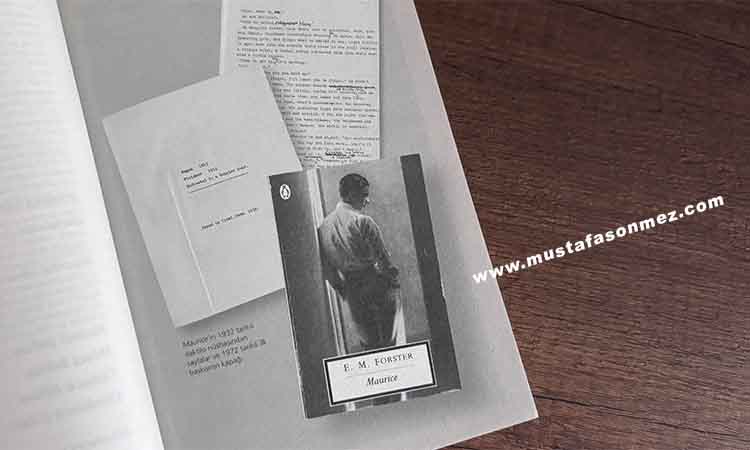
Maurice: Novel Analysis and Homosexuality in the Edwardian Era
The novel, set in the Edwardian era, deals with the pressure of society. For a young person, sexual orientation is both a legal crime and a social crime. Being understood in this way will change and ruin their careers and social status forever. In this context, Clive prefers his social status and the life he lives over his sexual orientation and happiness.
He will be a good politician and perhaps a representative in the future; there is even a possibility of him becoming a member of parliament. Conversely, Maurice tries to act like himself and tries to be the person he is, and his eyes see nothing; for him, what matters is not living as people or society wishes, but living as himself. He decides not to deepen his relationship with Alec, who is looked down upon there.
Being a gay man in that era is very difficult. This act, carried out secretly, often results in blackmail. Oscar Wilde is one of the best examples of this. During this period, no new legal regulation is desired; instead, heavier penalties for homosexuals are planned. This period is a very dark one.
Maurice, working in a job that brings in a lot of money, wants to tear down his entire career and just appear as the person he is. He has completely lost hope in his lover, who married and entered politics. The most impressive part of the novel is perhaps the last section. Maurice will talk to Clive one last time; this conversation is more about Maurice needing to fix himself, act like a heterosexual, and conform to society and the laws. Because he did this himself, but it was an incredible destruction for him, an internal conflict; he refused to be himself.
As Maurice does not do this, he plans to be with someone from a working-class background, much lower than himself. The relationship with Alec is also quite complicated. Because it is possible for a servant from the lower class to threaten him or blackmail him to extort money. This is actually like a big gamble for Maurice. However, Hall prefers to go quietly; in that most impressive scene of the novel, Clive is left all alone in the wooded area of his garden.
Social Pressures and the Struggle for Identity
The noble and main goal of the novel is actually social pressures and the struggle for identity. The family doctor Hall first consults, Dr. Barry, is a quite unsympathetic person and advises Hall to turn back from his mistake of a month ago and marry a woman, even to be in environments where women are abundant.
The second doctor, Lasker Jones, although he does not approve of this situation, does not really care about Hall’s sexual orientation; he thinks more modernly and even tells Hall to go to countries like Italy where the French Civil Code is valid; there, homosexuality—a man loving a man—is not a crime. When Hall first opened up to Dr. Barry, he said he was like Oscar Wilde.
Clive, who loves Greek culture and is inspired by the homosexual freedom in ancient Greece, went to Greece for a while. This is another detail in the novel.
The Edwardian Era and Homosexuality
Edwardian England (around 1901–1910) was a transition period where Victorian norms were still effective but some modernization trends had begun.
The 1885 Criminal Law Amendment Act was still in force; sexual relations between men were considered a crime and provided for serious penalties.
Although relations between women were not prohibited by law, secrecy was mandatory due to social pressure.
LGBT+ individuals had to hide their identities; themes of love, identity, and individual freedom were often combined with internal conflicts in this period.
In the literary environment, homosexual characters were usually shown in a hidden or implied manner; or they would fall into a disgraceful situation and experience misfortunes. Maurice has been a stance and an open rebellion against these norms.
Homosexuality in Literature
Edward Morgan Forster could not publish his novel immediately; he did not dare to do so. In that period, namely the Edwardian era and the Victorian era before it, homosexuality was generally ridiculed, or to set an example for society, one or both of the characters would either die, be killed, or commit suicide. (Just like today, showing homosexuals as bad and questioning their every move…)
However, Forster did none of these; despite everything, he created the character Maurice, who stands tall and disregards his career and social status for his true identity and personality. This is such a character that he has a relationship with a young man named Alec, a gay man from the working class.
The novel was published in 1971 after the author died; Forster, who was also gay, dedicated this novel “To a happier year.” The novel is also somewhat autobiographical. By saying, “Maurice is the suburbs, Clive is Cambridge. Since I knew the university, or rather a corner of it, quite well, I brought it out without difficulty and modeled it after an academic I knew more or less when I first brought it out…” he will present to you in the concluding note of the book that there are many narratives from his own life.
Quotes from the Book
One of the most dramatic dialogues in the book is the following conversation between Hall and Dr. Lasker Jones:
“Then what is to become of me?” said Maurice, with a sudden drop in his voice. He had spoken in despair, but Mr. Lasker Jones had an answer for every question. “I’m afraid my only advice to you is to settle in a country that has adopted the Code Napoléon,” he said. “I don’t understand.” “France or Italy, for instance. In those countries, homosexuality is no longer considered a crime.” “You mean that a Frenchman can be with a friend and not be sent to prison for it?” “Be with? You mean unite? If both are of age and not acting with public indecency, certainly.” “Will such a law ever come into force in England?” “I shouldn’t think so. England has always shrunk from admitting into human nature.” Maurice understood. He was an Englishman himself, and only his own troubles had been able to keep him awake. He smiled sadly. “Then it comes to this: people like me have always been and always will be, and generally they will be persecuted.” P.237
The scene where Hall tells Dr. Barry he is gay is also very dramatic. The doctor does not accept this and denies it. Dr. Barry is stricter.
“Then you didn’t guess,” said Maurice, with a mockery mixed with horror in his voice. “I’m an unspeakable of the Oscar Wilde sort.” He closed his eyes, pressing his fists against them, sitting motionless like someone who had begged for mercy from Caesar. At last the doctor could speak. He could not believe his ears. “Rubbish, rubbish!” was his reaction. Maurice had expected everything but this; if his words were rubbish, then his life was a dream. “Dr. Barry, I couldn’t explain—” “Now listen to me, Maurice, never let this evil hallucination, this devilish impulse, appear to you again.” He was impressed by the doctor’s voice; besides, wasn’t it “Science” speaking?
The LGBT+ Struggle in Edwardian England and Today
Let’s remember the words of Hall and Dr. Lasker Jones; the doctor had said: “I shouldn’t think so. England has always shrunk from admitting into human nature.”
When we look at today, we see that the laws punishing homosexuality in England were completely repealed in the early 1960s at the beginning of the 21st century. One of the victims of these laws was Alan Turing, the pioneer of modern computers and the one who cracked the Enigma codes. Turing tragically lost his life due to state pressure.
Today, however, homosexuality has been federally legalized in the United States, and marriages have become possible. In countries like Canada, Thailand, and the Netherlands, politics based on gender roles has largely ended. Technology and reason support social progress by making individual freedoms a priority.
Despite this, there are still countries where homosexuality is prohibited and LGBT individuals are subjected to violence and torture. While modern LGBTQ literature still deals with these fundamental problems, Dr. Lasker Jones’s word more or less maintains its relevance: “England has always shrunk from admitting into human nature.” It will be enough to put LGBTQ-hostile countries and policies in place of England here.
Today, thoughts such as transhumanism and posthumanism evaluate the human as a new species. In the future, the human may become a being integrated with pure thought and the universe; individual freedom and consciousness will rise in our civilization independently of biological gender. However, countries that cannot keep up with this change still continue to make politics over LGBT. Perhaps when the human develops their knowledge and consciousness in universal dimensions, they will transcend the pressures and social restrictions of the past; they will become a thought-based and conscious being where bodily gender no longer carries a meaning: hormones and the desires of the human body will have no meaning left.
Discussing homosexuality and LGBTQ+ issues in a time frame where we discuss our dreams for the future, the values of being human, and the limits of our biological existence at the beginning of the age of artificial intelligence will fix us to a ground even below the first step of humanity.
Film Adaptation
The 1987 film adaptation is truly a masterpiece. It is a film consistent with the spirit of the novel. Although the narrative of the novel is more literary, the film is also a high-quality production. While the novel is full of details that are boring in places and difficult to progress, the film is quite fluid. You can look here for the film Maurice.
Maurice Novel (Book) Information
Maurice deals with the identity conflict, forbidden love, and search for freedom experienced by a young man discovering his homosexual identity in Edwardian England against social pressures and laws. The basic themes of the novel include homosexuality, repressed emotions, society–individual conflict, and the transformative power of love; all these events are told to us in 298 pages. The book publisher is İletişim Yayınları. If you ask where to read it, Goodreads is enough for you. Is there a film adaptation? Yes, there is, and it is a very good adaptation. You should watch the 1987 film Maurice. Where to watch: I have no information at all on where it is officially and legally watched. I cannot give much information on this subject. Are you curious about the author? For the question “Who is E. M. Forster?” the link is ready.
Character Analyses
- Maurice Hall: Maurice represents the themes of identity search, repression, and liberation at the center of the novel. At a young age, he is squeezed between the moral patterns of society and his own internal impulses. First, he questions his identity with the feelings he has for Clive, then he accepts his essence thanks to the relationship he has with Alec, but their relations are very bad. Maurice’s journey describes a resistance going toward liberation from the conditions where homosexual identities were forced to be hidden in Edwardian England. He is like a never-ending character of individual courage, the desire to transcend social pressure, and the transformative power of love, which have been the same for centuries.
- Clive Durham: Clive is a focus of both emotional and intellectual attraction in Maurice’s youth. However, his story is also an example of individuals who deny their love for the sake of security and social approval in Edwardian England. He chose hiding, acting, marrying, and denying himself, not love and true identity. This choice is not just a personal break but a result of the anti-homosexuality laws and social pressure of the period. Clive’s character shows the tragic conflict between individual happiness and social harmony; it’s a great pity.
- Alec Scudder: Alec is the most free-spirited character of the novel. He is decisive in Maurice choosing love and freedom. Alec, coming from the lower classes, establishes an equal relationship with Maurice by transcending the social hierarchy. This bond is a radical union in Edwardian England that breaks both class and sexual identity barriers; such a situation is not even in question. Alec’s presence shows that love can tear down the boundaries set by society. But in real life, it is not like that at all.